Restaurant chairs and tables that last: wood, upholstery and stone
What a restaurant chair goes through in a week, solid wood and upholstery in service, comfort for long dinners, stone table tops, the cost per cover, and how to order a series.
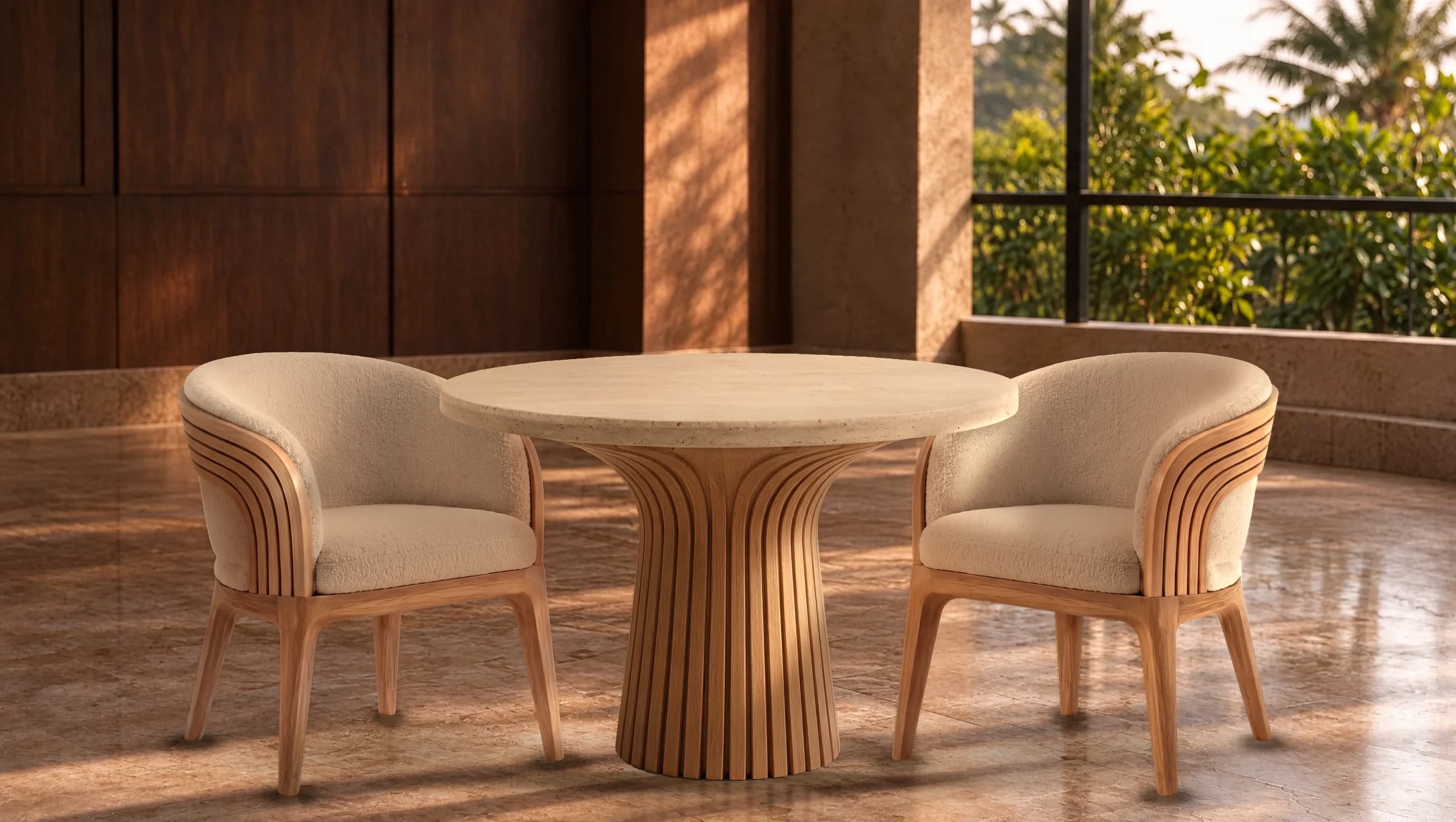
A restaurant chair is dragged, tipped, lifted and wiped every day, so choose a solid wood frame that can be repaired, an upholstery your team can clean, and a width that fits your covers. For tables, a pedestal base keeps legs out of the way and a honed stone top takes daily service. Our Hospitality Dining Chair starts at €1,150.
What a restaurant chair goes through
At home a dining chair is used a few times a day. In a restaurant the same chair is pulled out and pushed in a dozen times a night, tipped back by a guest who leans, lifted onto a table when the floor is mopped, and wiped down after every service.
Most of that load goes into the joints, where the legs meet the seat and the back meets the frame. That is where a chair fails first, and that is what to ask about first.
Solid wood in service
A frame in solid hardwood can be repaired. A loose joint can be reglued, a scuffed leg sanded and refinished. A frame in board or a thin veneer usually cannot; once it is damaged, the chair is replaced.
Ask what sits under the legs. Floor protectors protect the floor and the legs, and they are cheap to replace. Ask too whether the chair is light enough for your team to lift onto a table forty times at the end of a night.
Our Hospitality Dining Chair is solid teak with a layered teak backrest, designed for restaurant use and light to lift. It is 54 cm wide, 56 cm deep and 76 cm high, with an upholstered seat and back.
Upholstery in service
Upholstery decides how a room feels and how much work it is. Leather wipes clean after a spilled glass of wine and changes colour with use. Bouclé and textiles are warmer and absorb sound, which helps in a full room, but need more care when something is spilled.
Ask any supplier for the abrasion rating of the fabric and for the fire-safety documentation that your country and your insurer require for upholstered seating in public spaces. The rules differ per country, so check them before you choose a fabric.
We upholster the Hospitality Dining Chair in Bouclé Ivory, Bouclé Taupe, Leather Cognac, Leather Taupe, Leather Olive or Ivory Textile.
Comfort for long dinners
A tasting menu takes three hours. A chair that feels fine for a coffee can feel hard by the main course. An upholstered seat and back, a back that supports below the shoulder blades and a seat that is not too deep keep guests comfortable until dessert.
Width matters as much as comfort, because it sets how many covers fit. A chair of 54 cm leaves room for about 60 cm of table per guest. Wider chairs feel generous but cost covers on a long banquette or a table for eight.
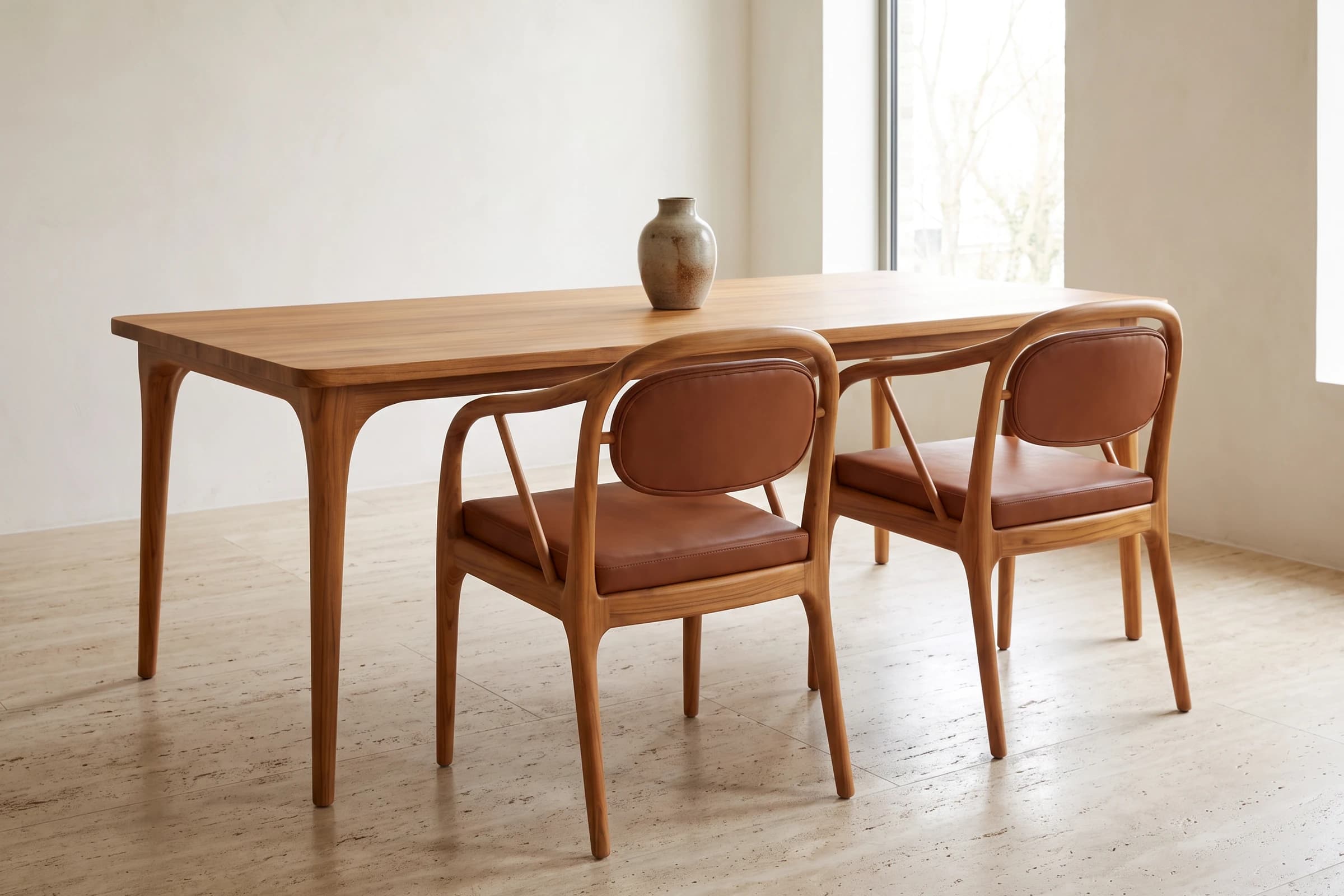
For a quieter dining room, our Armchair has arms at 64 cm; they slide under our Frame Dining Table.
Stone table tops
Stone is heavy, cool and still. A honed finish is matt, so it shows less glare under restaurant lighting than a polished top. Every slab is different, and in a room with thirty tables that variation is part of the character.
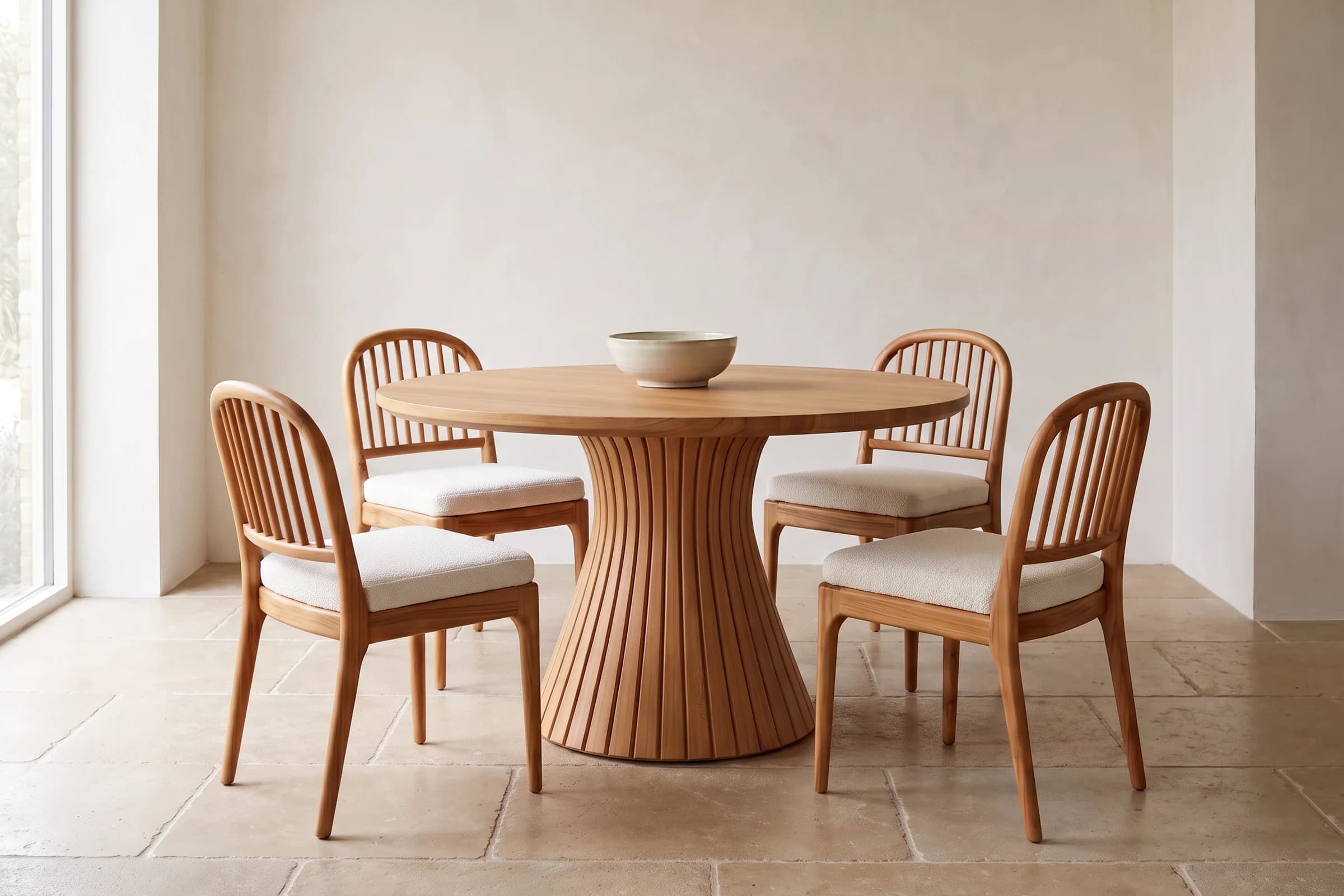
The base matters as much as the top. A pedestal base leaves the edge of the table free, so chairs can go anywhere around it, and two square tables can be pushed together for four.
Our Restaurant Table has a layered teak base under a honed stone top: round in Ø 70, 80 or 90 cm, or square in 70 × 70 or 80 × 80 cm, 74 cm high. It starts at €1,900. For larger groups, the Round Dining Table seats four at Ø 120 and up to seven at Ø 140, from €3,600.
Ask the maker how their stone tops are finished and sealed, and what they advise for daily cleaning in a restaurant. The answer depends on the stone.
Cost per cover
Restaurant furniture is easiest to compare per cover: the chair plus a share of the table. A table for two with two Hospitality Dining Chairs starts at €1,900 for the table and €1,150 per chair, including VAT.
The cheaper chair is often the more expensive one over a few seasons, because it is replaced instead of repaired. How long any chair lasts depends on the room, the team and the care, so be wary of anyone who promises a number.
Ordering a series
For a restaurant, start with one approved sample before the full run: everyone signs off on the same chair, the same finish and the same upholstery. We make our hotel and restaurant pieces in series, so every chair in the room matches the sample.
Each piece is made by hand in our atelier in Bali, in about six weeks after the order, then travels 6–9 weeks by sea; we deliver within the EU. For architects, designers and orders of ten pieces or more, project pricing is available on request through trade. Our page for hotels and restaurants shows the full range, and furniture for boutique hotels covers planning around an opening.
Questions
What is the best material for restaurant chairs?
A frame in solid hardwood, because it can be repaired and refinished, with an upholstery your team can keep clean. Ask for the abrasion rating and the fire-safety documentation your country requires.
How wide should a restaurant chair be?
Restaurant chairs are usually 45 to 55 cm wide. Plan about 60 cm of table per guest. Our Hospitality Dining Chair is 54 cm wide.
Are stone table tops good for restaurants?
Stone is heavy and cool, and a honed finish shows little glare. Every slab is different. Ask the maker how the top is finished and sealed and what they advise for daily cleaning.
How long does an order of restaurant chairs take?
Our pieces are made in about six weeks after the order, then travel 6–9 weeks by sea to the EU. For a series, add time for a sample and its approval before the full run.
Talk it through
A free 20-minute call with the people who design and make the furniture: what fits your room, the finishes, a price and a lead time.