Quiet luxury furniture: what it means and what to look for
Where quiet luxury comes from, why it means fewer and better pieces, which materials and colours belong to it, and the quality signs you can check yourself.
Quiet luxury furniture is furniture judged by its material and construction instead of a logo: solid wood, real stone, good leather and wool, in plain forms and a narrow palette. Buy fewer pieces, check how they are made, and let one piece per room carry it. Our solid teak pieces start at €1,150.
Where the term comes from
The phrase started in fashion: clothes without logos, recognised by the cloth and the cut. Interiors picked it up soon after. In furniture it describes rooms where nothing announces its price, and where you notice the quality when you touch, sit or look closely.
It is a marketing term, and it is used loosely. What remains when you strip the label off is useful, though: buy less, buy things that are made well, and choose materials that age instead of wear out.
Fewer, better pieces
A room furnished this way has fewer things in it. A table, the chairs around it, one good chair to read in, a lamp. Empty floor and bare wall are part of the plan.
That changes where the budget goes. Ten cheap pieces become four that are made to be kept. In practice that usually means the pieces you touch every day: the dining table, the chairs, the desk, the bed.
Materials and palette
The materials are the ones you can recognise with your eyes closed: solid wood, honed stone, full-grain leather, wool and bouclé, linen. They show their grain, veins and texture, and they look better after years of use when they are made well.
The colours come from those materials. Sand, ivory and stone; cognac and taupe leather; wood from light oak to almost black. One or two wood tones per room is enough.
Our pieces are solid teak, never veneer, finished by hand in Light Oak, Antique Oak or Wengé. Seats come in bouclé, textile or leather, tops in teak or in Travertine, Crema Marfil or Dark Emperador. See materials.
One piece per room that carries it
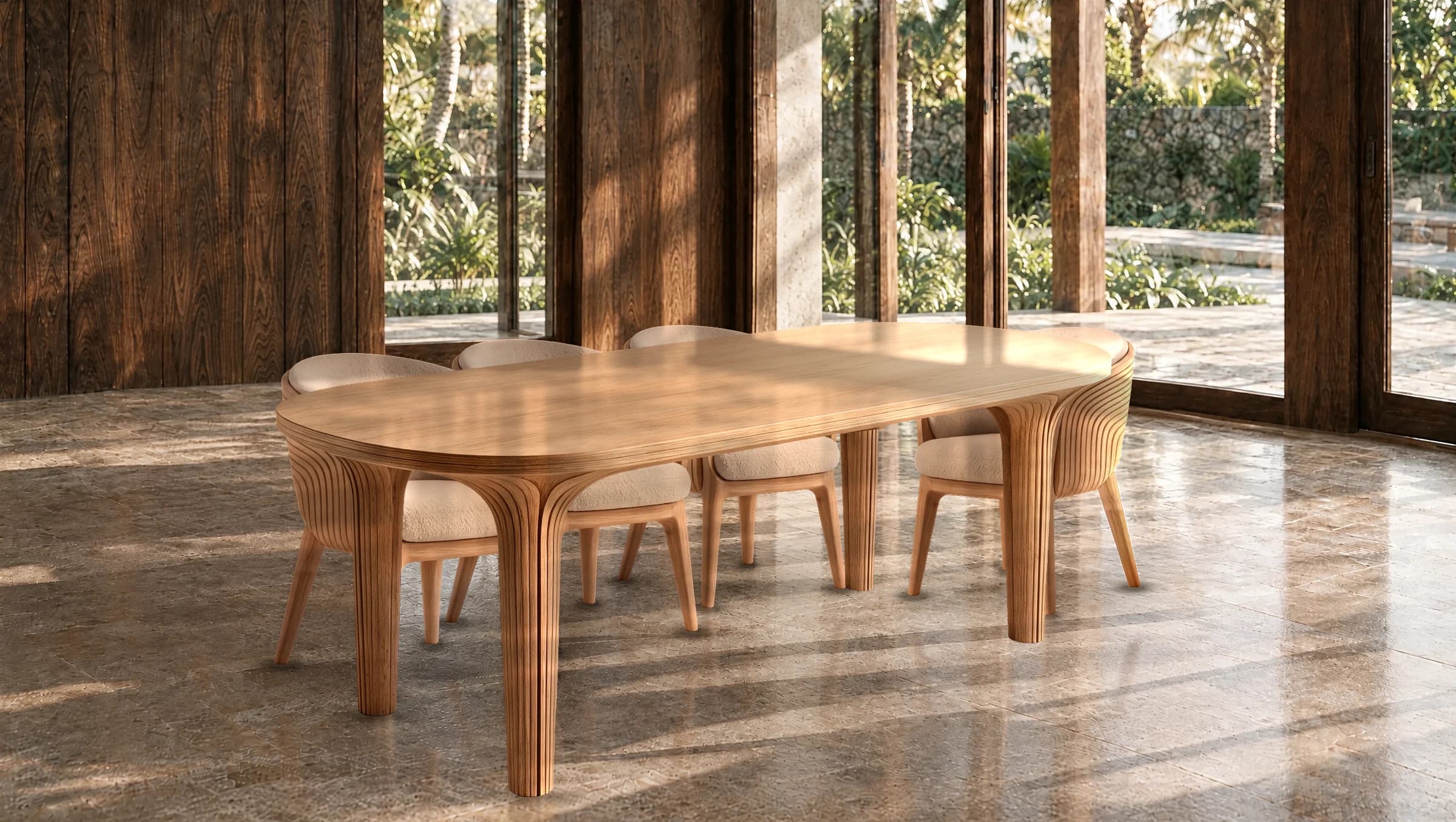
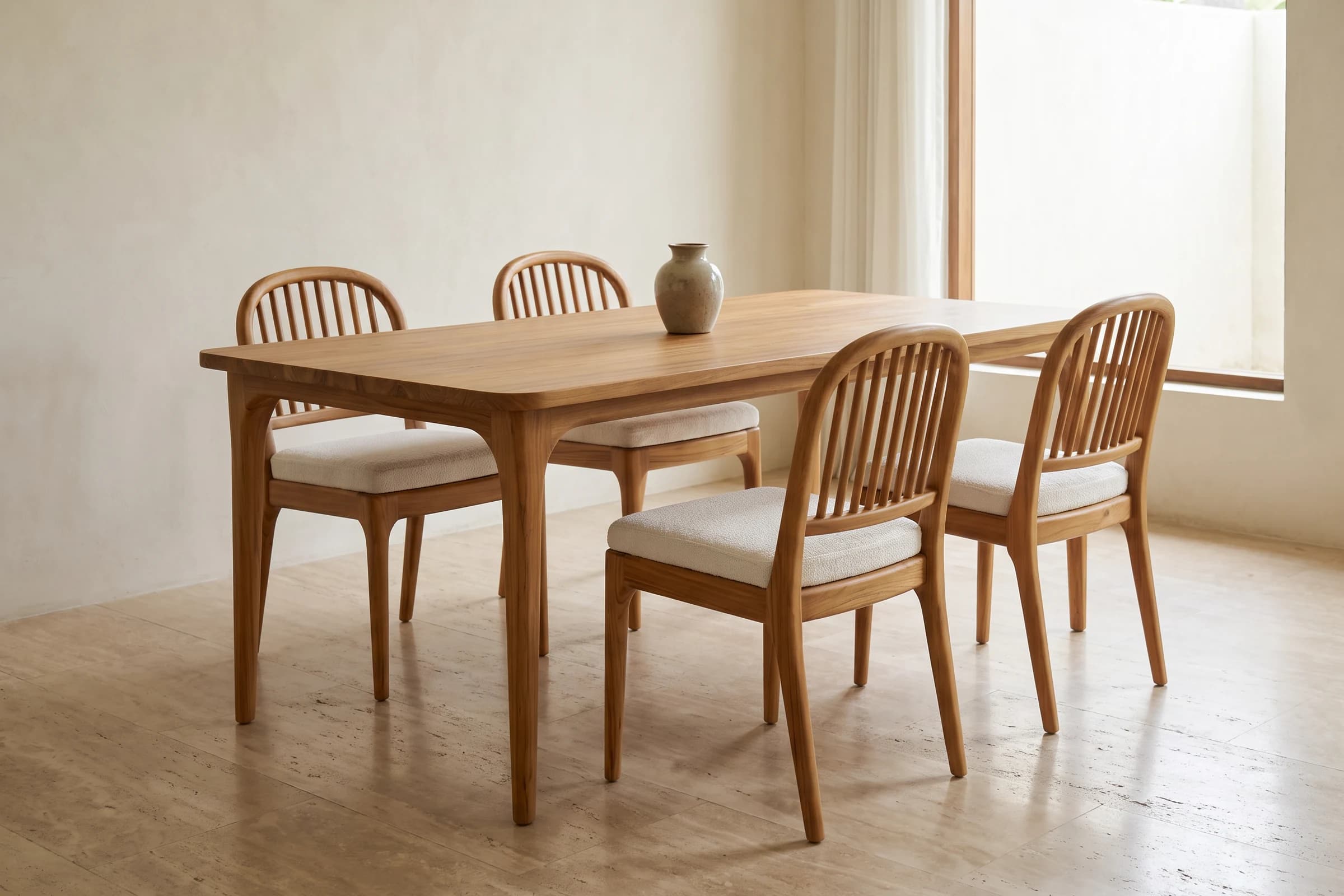
Every room needs one piece that you look at first. In a dining room that is the table. Our Dining Table is up to three metres of solid teak on four grooved, flared legs. Around it, simple chairs such as the Side Chair, where one teak hoop runs from the rear legs over the back.
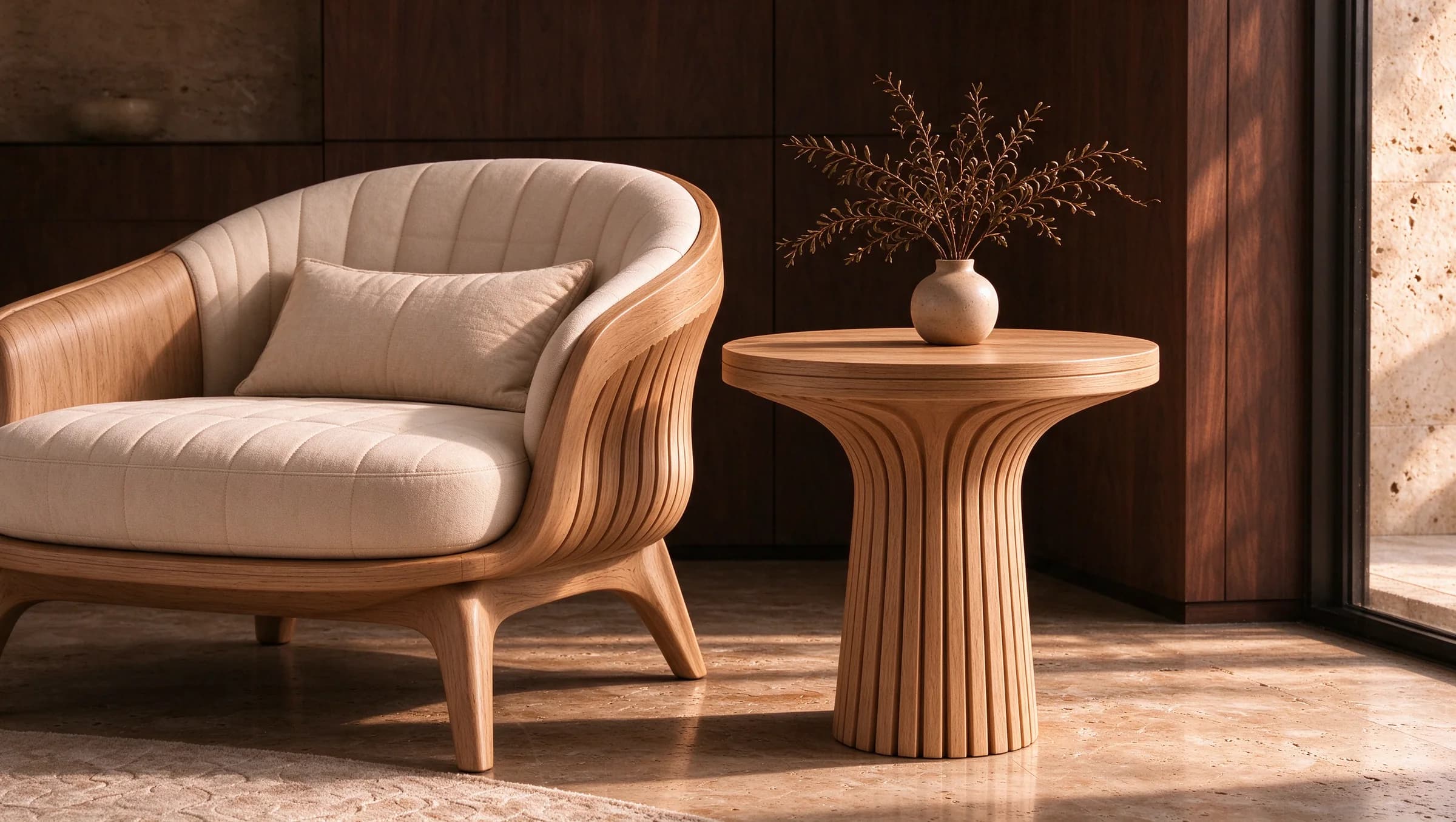
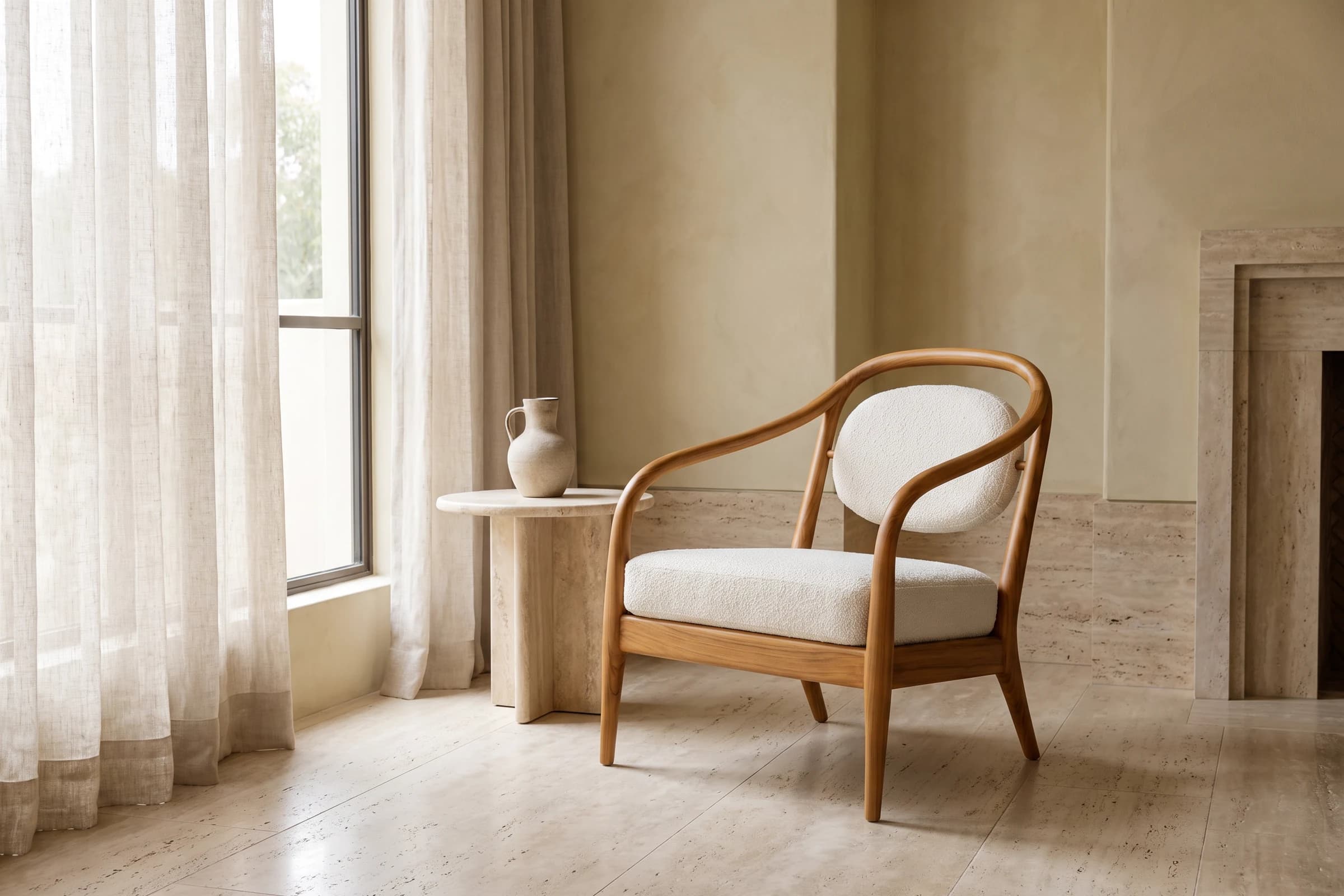
In a living room it can be a single chair. The Easy Chair has arms in one S-curve from the back to the floor, a seat at 39 cm and a back reclined to 108°. Put a small table next to it, such as the Side Table, Ø 45 cm with a teak or stone top, and leave the rest of the corner empty.
Signs of quality you can check yourself
A logo is easy to leave off. Construction is harder to fake. Before you buy, check:
- Solid or veneer. Look at the edge and the end grain: in solid wood the grain runs round the corner. Our guide to solid teak vs veneer shows how to tell.
- Weight. Solid wood and stone are heavy. A table that one person lifts easily is usually hollow or veneered board.
- Joints. Look under the table and the seat. Wood joined to wood is a good sign; staples and visible screws in board are not.
- Who makes it. Ask where it is made and by whom, and whether they make it after your order or ship it from a warehouse.
- The warranty. Read what it covers and for how long. Ours is two years on the construction.
How ordering works
Every piece is made by hand in our own atelier in Bali after your order, in about six weeks. It then travels 6–9 weeks by sea to your door; we deliver within the EU. You pay in full when you order; if you would rather pay half up front, tell us before you order. Prices include VAT, one price across the EU, and shipping is extra. Within the EU we pay the import duties and VAT.
To find the piece that should carry your room, the quiz asks seven short questions and suggests three. For a whole house or a hotel, book a call.
Questions
What is quiet luxury in interior design?
A way of furnishing that relies on material and construction instead of logos or ornament: solid wood, stone, leather and wool, in plain forms, a narrow palette and few pieces.
What colours suit a quiet luxury living room?
Colours taken from the materials: sand, ivory and stone, cognac or taupe leather, and one or two wood tones from light to dark.
Is quiet luxury furniture expensive?
Each piece costs more than mass-produced furniture, but you buy fewer of them. Our solid teak pieces range from €1,150 to €9,900, including VAT; shipping is extra.
How can you tell if furniture is well made?
Check whether it is solid wood or veneer, how heavy it is, how the joints are made, who makes it and where, and what the warranty covers.
Find your piece
Seven short questions about your room, your timing and your budget — and three pieces that fit.