What is sculptural furniture? A guide to living with pieces that have presence
A working definition, where the language comes from, how many sculptural pieces a room can hold, which materials carry form best — and why a sculptural piece still has to be good to use.
A definition: when furniture becomes form
Most furniture is designed from the inside out. A chair starts as a seat at a certain height, a back at a certain angle, and the form follows from the parts. Sculptural furniture reverses the emphasis. It is still a chair — but it is conceived as one continuous form first, and you read it as a shape before you read it as a set of components.
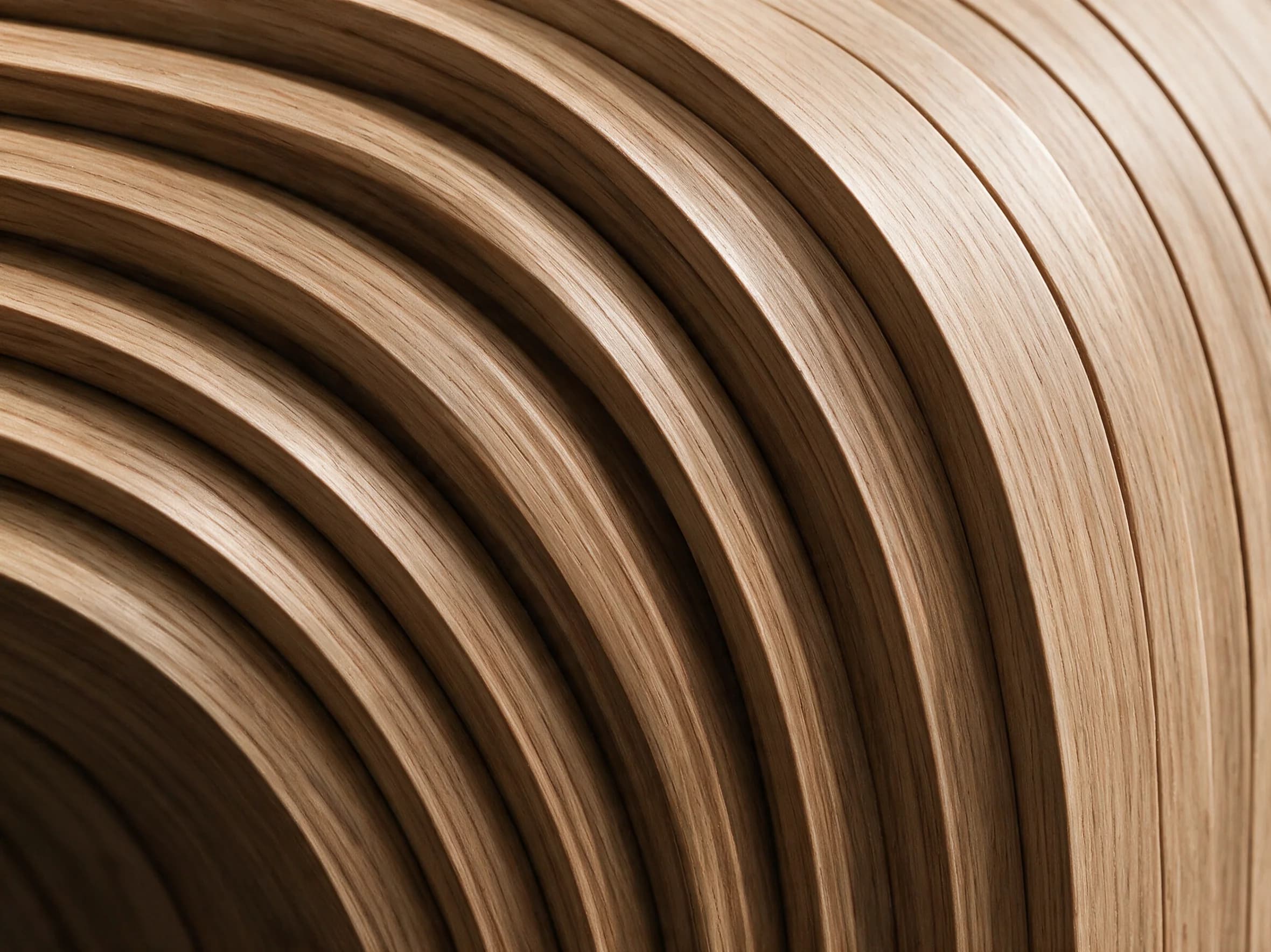
In practice, a few qualities recur. Lines continue instead of stopping at joints. Surfaces curve in more than one direction. The piece looks resolved from every side, not only from the front, so it can stand in the middle of a room. And the material is part of the idea: the grain, the layers, the weight of stone are shown rather than covered.
Sculptural does not mean decorative. Ornament is added to a form; sculpture is the form. A plain table can be sculptural if its proportions and its base are considered as one gesture.
Where the language comes from
The idea is older than the word. Arts and Crafts makers already treated furniture as an object worth looking at. But the vocabulary most people mean today comes from the middle of the twentieth century.
Isamu Noguchi, a sculptor first, designed a glass-topped coffee table in the 1940s whose wooden base is essentially two interlocking sculptures. Charlotte Perriand drew free-form tables in solid wood whose tops follow no rectangle. George Nakashima let the natural edge of a slab decide the outline of a table. Wendell Castle, in the 1960s, built furniture from stacked and carved layers of wood — a way of making curved forms in solid timber that is still recognisable in studio furniture today.
Architecture runs alongside all of this. The curved concrete of the 1950s and 1960s, and later the soft geometry of contemporary buildings, gave interiors walls and openings that rectangular furniture sits awkwardly against. Sculptural pieces answer those spaces in their own language.
One sculptural piece per room
A room full of statement pieces makes no statement at all. The most convincing interiors use one sculptural piece as an anchor and let everything around it be quiet: a dining table with simple chairs, or sculptural chairs around a calm table; a lounge chair in a corner of an otherwise restrained living room.
Give the piece space. Sculptural furniture is designed to be seen from several sides, and it loses its effect when it is pushed against a wall or crowded by other furniture. Light matters too — a low, raking light along a curved surface shows the form far better than overhead downlights.
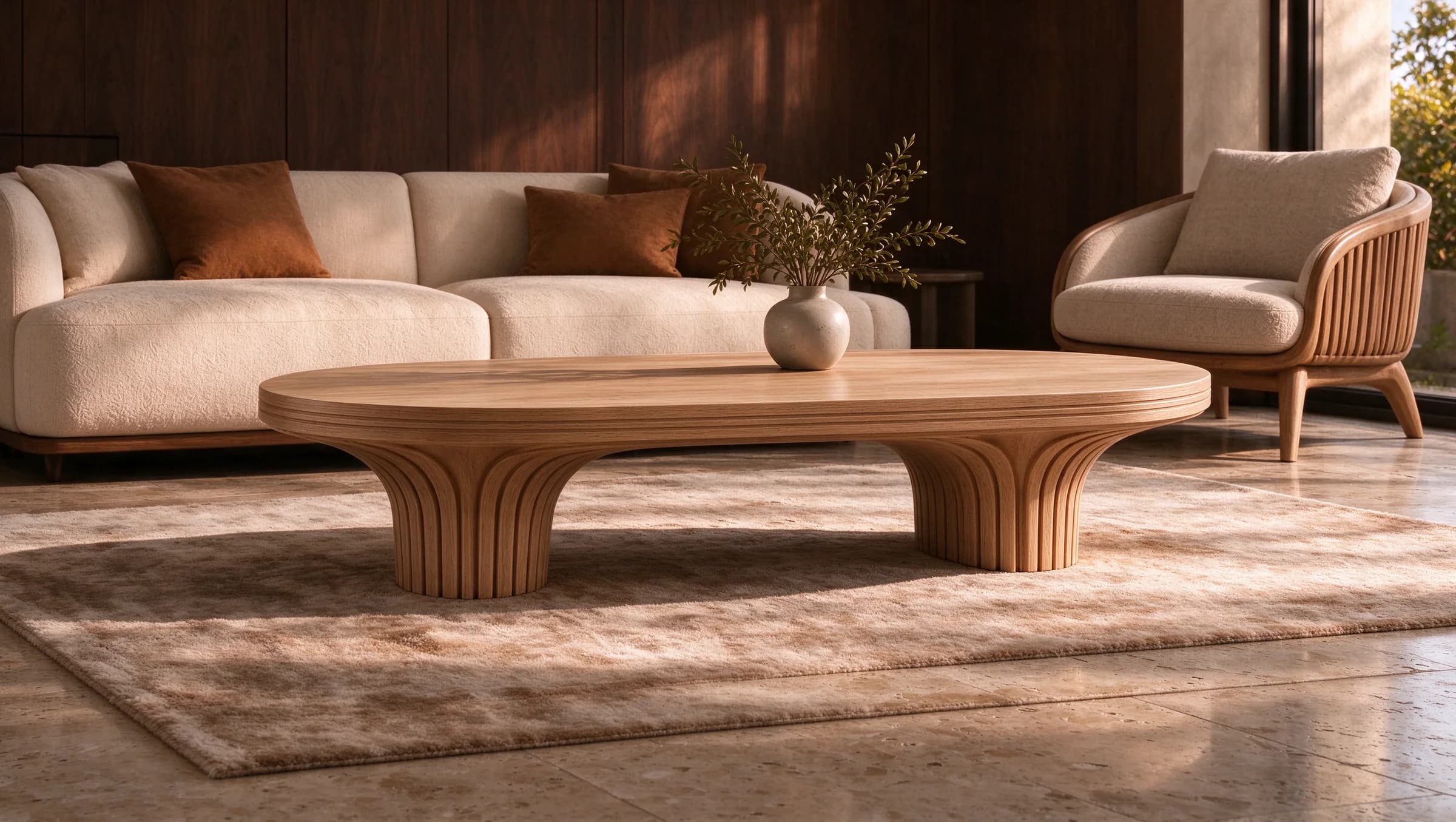
Scale is the other decision. A sculptural piece can be modest in size and still carry a room, as long as its form is clear. A Side Table beside a sofa, or a Coffee Table in the centre, is often enough.
Materials that carry form
Not every material wants to be curved. The ones that do share a quality: they look the same through their thickness, so a shaped edge reveals the material instead of exposing a core.
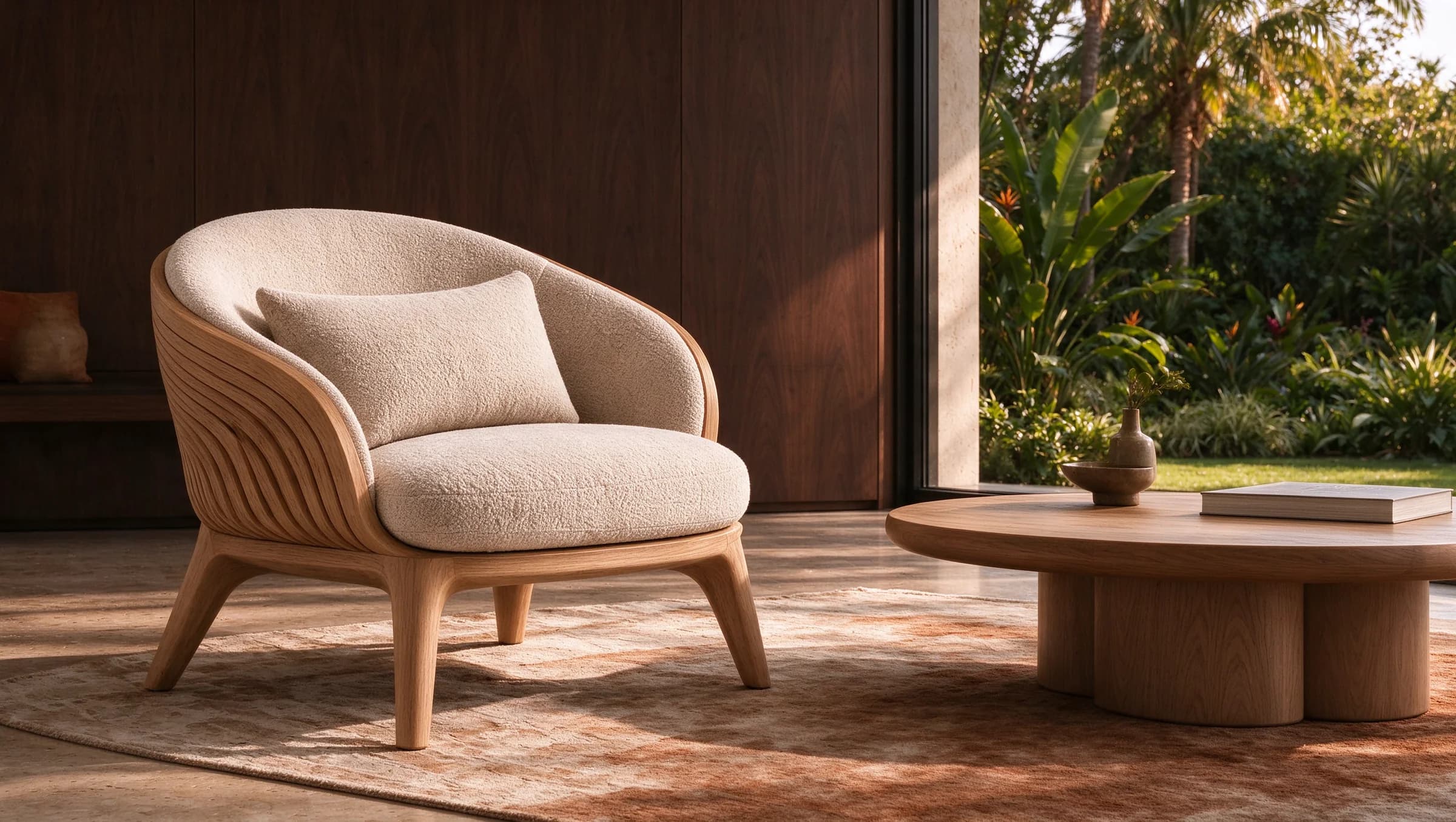
- Layered solid wood. Built up in layers and shaped, wood can follow a continuous curve, and the layers themselves become a visible line along the edge. Many ALUR pieces are built this way, and every one is solid wood, mostly teak, never veneer. More in our guide to solid wood and veneer.
- Stone. Travertine and marble add weight and a cool surface; on a sculptural base, a stone top reads as a calm plane above a moving form.
- Bouclé and leather. Upholstery softens a shell without hiding it. A textured bouclé catches light along curves; leather emphasises a clean line.
Sculptural, but good to use
The test of a sculptural piece is the same as for any furniture: can you live with it every day? A dining chair must still be comfortable after two hours at the table. A desk must have room for knees, cables and work. A bed must be easy to make.
That is where the craft lies. On our Lounge Chair, the shell curves around the body because that is where support is needed. On the Dining Table, the four slender legs sit at the corners, so the form stays light and there is room for every chair along the sides. A sculptural piece that fails at its job is an object; one that succeeds is furniture you keep.
Finding the right piece
Start with the room, not the object. Where is the light? Which side will people see first? What does the piece need to do every day? With those answers, the choice narrows quickly — the quiz asks exactly these questions and suggests three pieces. If none of them is quite right, a piece can also be designed for the room; that is what custom made is for.
Questions
What does sculptural furniture mean?
Furniture conceived as one continuous form, which you read as a shape before you read it as parts. Lines continue through joints, surfaces curve, and the piece is resolved from every side.
How do you style a sculptural piece?
Use one per room as an anchor, keep what surrounds it calm, give it space to be seen from several sides, and light it from the side rather than only from above.
Is sculptural furniture comfortable?
It should be. A good sculptural chair curves where the body needs support. Ask for seat height and depth, and sit in it or ask the maker how it is shaped, before you buy.
What materials are used for sculptural furniture?
Materials that look the same through their thickness: solid wood (often layered), stone, cast or bent metal, and upholstery over a shaped shell. Veneer is less suited to strong curves.
Find your piece
Seven short questions about your room, your timing and your budget — and three pieces that fit.
