Teak indoors: what to know about teak furniture in the home
Indoor teak is a different thing from garden teak. How it looks, how it reacts to sunlight, heat and dry air, how to keep it clean, and what a finish changes.

Teak is a dense, naturally oily hardwood that works well indoors. Inside, it keeps its colour and finish far longer than on a terrace, because it is out of rain and frost. Keep it out of constant direct sun, away from radiators, and wipe it with a damp, well-wrung cloth. Use coasters under hot or wet things.
Why is indoor teak different from garden teak?
Most of what is written about teak is about garden furniture. Outside, teak is left in rain and sun, and its surface slowly turns silver-grey. People then argue about whether to oil it back to brown. Almost none of that applies indoors.
Inside, teak is protected from the two things that change it most: water standing on the surface and strong ultraviolet light all day. A teak table indoors is treated like any other good wooden table. What matters inside is heat, dry air and daily cleaning.
It helps to search for the right thing, too. “Teak oil” and “teak cleaner” are mostly garden products, made for bare wood outdoors. On an indoor piece with a finish, they can do more harm than good. Always check with the maker first.
Why use teak for indoor furniture at all?
Teak is dense and contains natural oils, which make it stable and resistant to moisture. For a maker that means a wood that moves relatively little once it is dry, and that holds a crisp edge after shaping. For the owner it means a table or chair that takes daily use.
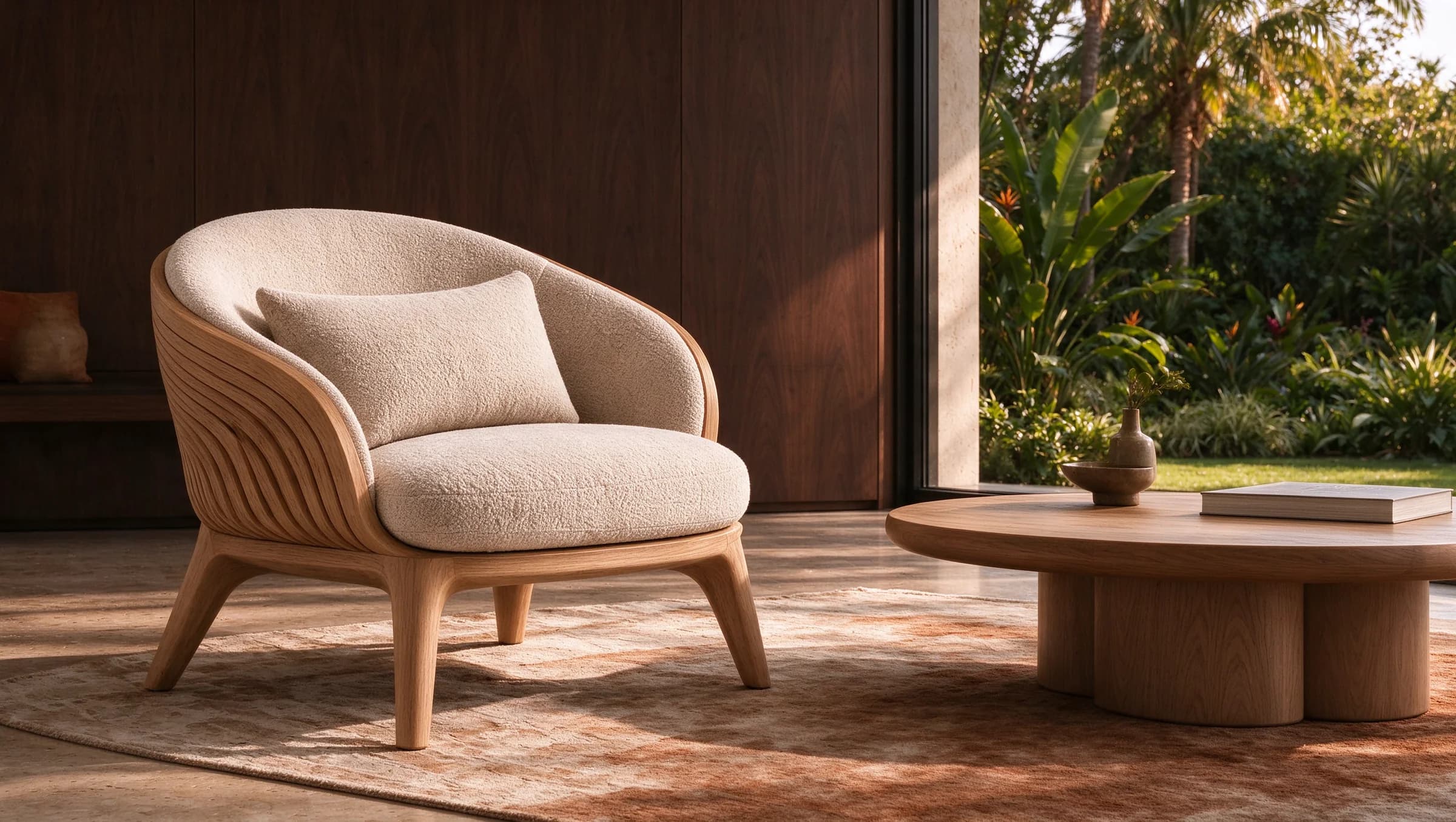
We work mostly in solid teak, and many of our pieces are built in layers shaped into continuous curves. A curve cut into solid wood shows the material all the way through. That is only possible with solid timber, never with veneered board. Our guide to solid teak and veneer explains why.
What does a finish do to teak?
Raw teak has a golden-brown colour that varies from board to board. In a layered piece, that variation can make the layers look patchy. A finish evens it out, so the form reads first and the colour of the wood second.
Our pieces come in three finishes: Light Oak, Antique Oak and Wengé. These are the names of the finishes, not wood species. The wood underneath is solid teak in each case. You can compare all three on the materials page and on each product page, where the main image changes with the finish you choose.
How does sunlight affect teak indoors?
All wood changes colour in light, and teak is no exception. Through a window, the change is slow, but a piece standing in the same strong sun every afternoon will, over time, be lighter or warmer on the side that faces the glass.
You do not need to keep furniture in the dark. Two simple habits help. Move objects on a table now and then, so a vase or a lamp does not leave a paler shadow beneath it. And if one piece stands in full sun for hours a day, a sheer curtain or blind in those hours makes a difference.
What about underfloor heating, radiators and dry air?
Wood takes on and gives off moisture with the air around it. In a room that is very dry for long periods, as in winter with strong heating, solid wood shrinks slightly; in a humid summer it swells slightly. A well-made piece is built to allow for this movement. Teak moves less than many other woods, but no solid wood is entirely still.
What matters most is avoiding extremes close to the piece. Do not place a table or chair directly against a radiator or a heating vent, or directly above a floor heating outlet that blows warm air. A room that is comfortable for people is generally comfortable for wood. If you notice that your skin and lips feel dry all winter, the furniture notices it too.
How do you keep teak furniture clean every day?
On a finished indoor piece, daily care is simple and mostly about what not to use.
- Dust with a soft, dry cloth.
- For marks, use a cloth dampened with water and wrung out well, then wipe dry with a second cloth.
- Wipe up spills straight away, especially wine, coffee, oil and citrus.
- Use coasters under glasses and pads under hot dishes. Heat and standing water are what most often leave marks.
- Avoid all-purpose sprays, silicone polishes, abrasive sponges and garden teak products unless the maker advises them.
What if the surface gets marked?
This is where solid wood earns its place. A deep scratch or a ring in a veneered surface is often permanent, because the decorative layer is too thin to sand. A solid teak surface can be sanded back and refinished, locally or as a whole, by someone who knows the finish.
Because the right method depends on the finish, ask us before you treat a mark yourself. Send a photo, and we will tell you what we would do. We do not publish a general routine for our finishes, because a wrong product can make a small mark harder to repair.
Which teak pieces suit which rooms?
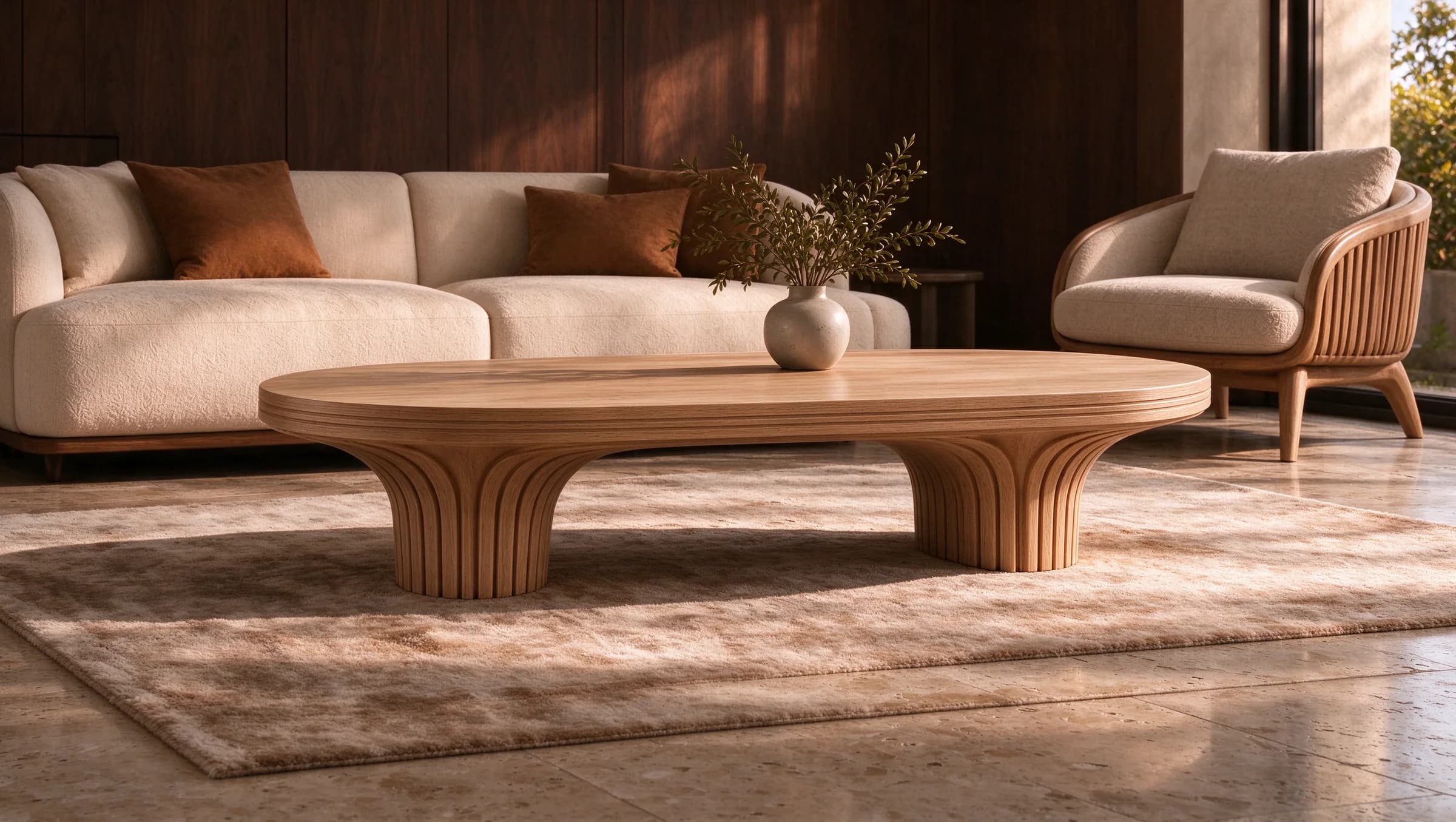
A dining table takes the most daily wear: plates, elbows, homework, hot pans. Our Dining Table in solid teak starts at €6,900. A coffee table lives at knee height in the light of the living room; our Coffee Table starts at €3,500 and can take a stone top if you prefer an even harder surface for cups. Upholstered pieces such as the Lounge Chair, from €3,900, have less exposed wood to look after.
If you are not sure which piece or finish suits your room, the quiz asks seven short questions and suggests three pieces.
Questions
Is teak good for indoor furniture?
Yes. Teak is a dense, stable hardwood with natural oils that resist moisture. Indoors it is out of rain and strong sun, so it keeps its surface far longer than garden teak.
Should I oil teak furniture indoors?
Only if the maker says so. Teak oil is mainly meant for bare garden teak. On a finished piece it can leave a sticky or uneven surface. Ask the maker which product, if any, suits the finish.
Will indoor teak turn grey?
The silver-grey colour comes from rain and strong UV outdoors. A finished teak piece indoors does not go grey, although like all wood it slowly changes colour in direct sunlight.
Can teak furniture stand next to a radiator?
Better not directly against it. Strong local heat dries solid wood and can cause movement or fine cracks over time. Leave some distance, and avoid hot air blowing straight at the piece.
Find your piece
Seven short questions about your room, your timing and your budget — and three pieces that fit.