Organic modern furniture: curves, wood and calm
What organic modern means in furniture, how to use curves without kitsch, which materials suit the style, and how rounded pieces sit among straight lines.
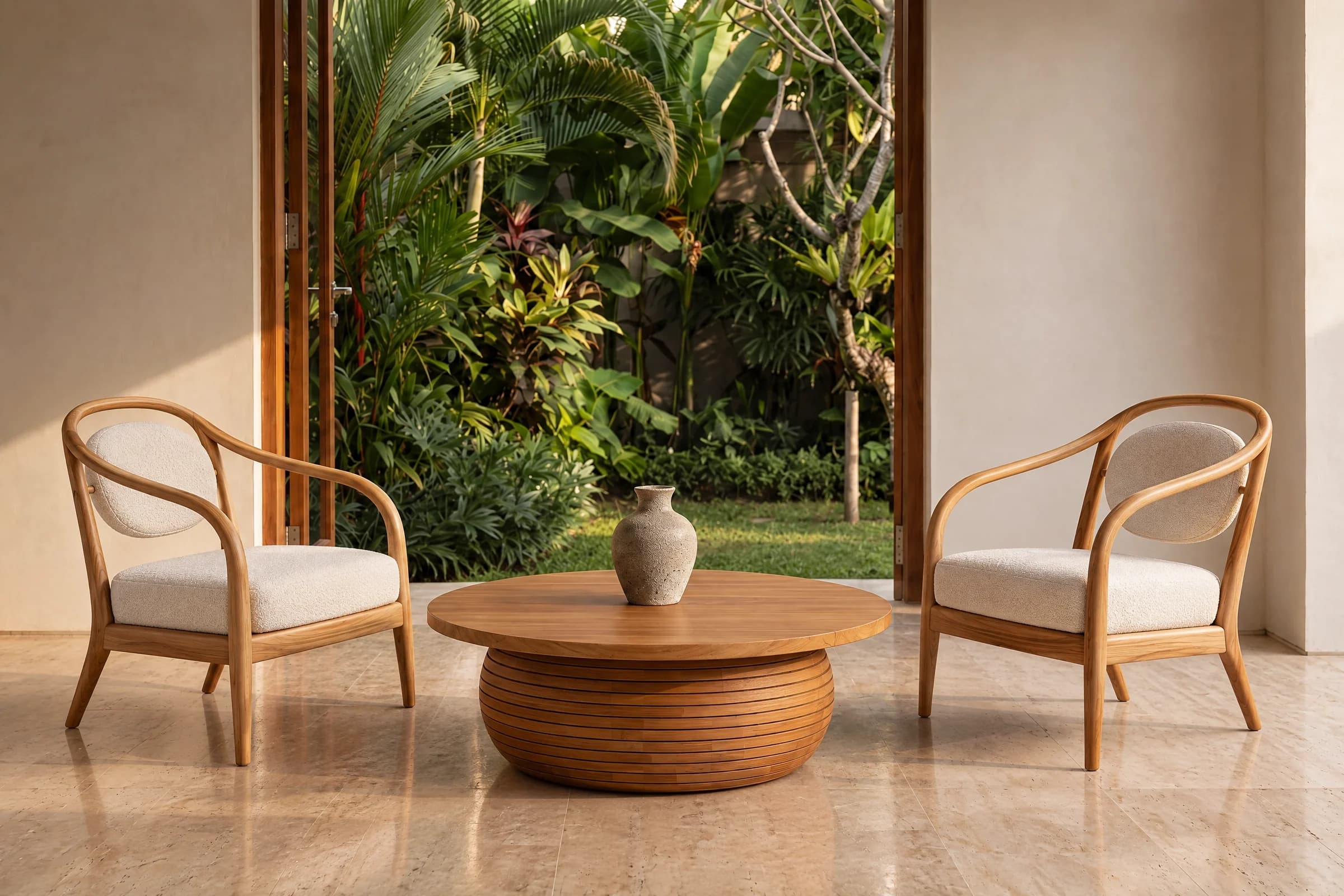
Organic modern furniture combines soft, rounded outlines with plain modern restraint: solid wood, stone and woven fabric, in a small palette, with no ornament. Start with one rounded piece you use every day, such as a round table or an armchair, and keep the rest of the room simple. Our solid teak pieces start at €1,150.
What does organic modern mean?
The term joins two ideas. Organic stands for outlines you find in nature and in things shaped by hand: round tops, tapering legs, edges with a radius you can feel. Modern stands for restraint: few materials, no ornament, every part doing a job.
The idea is not new. Mid-century designers such as Alvar Aalto and Isamu Noguchi worked with rounded wood and soft outlines decades ago. What is new is the name, and the way it is used today for rooms that combine warm wood, natural stone and pale walls.
Curves without kitsch
A curve looks right when it does something. An arm that runs down into the leg, a column that widens to carry a top, a back that follows your shoulders. A curve added only for effect starts to look like a theme.
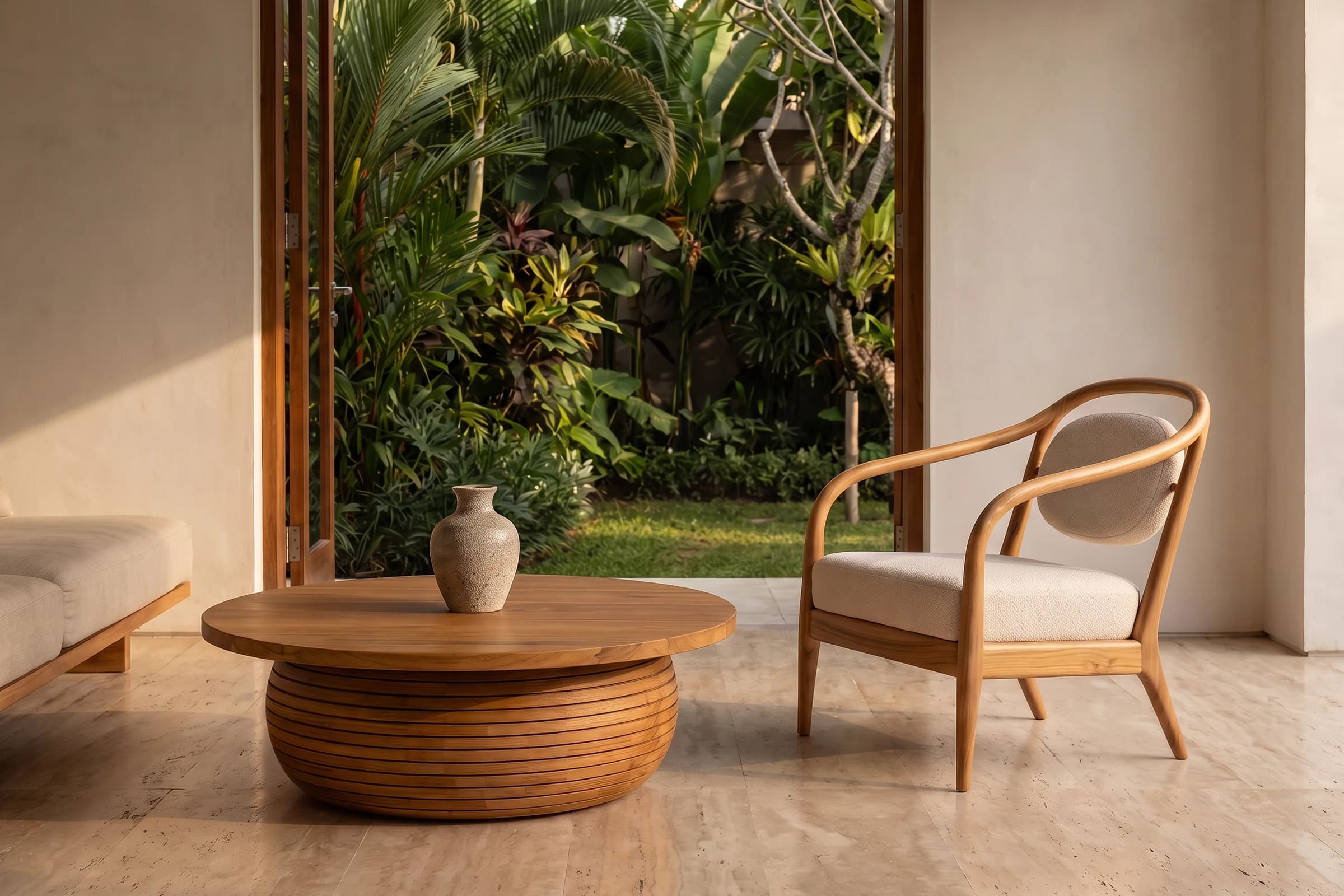
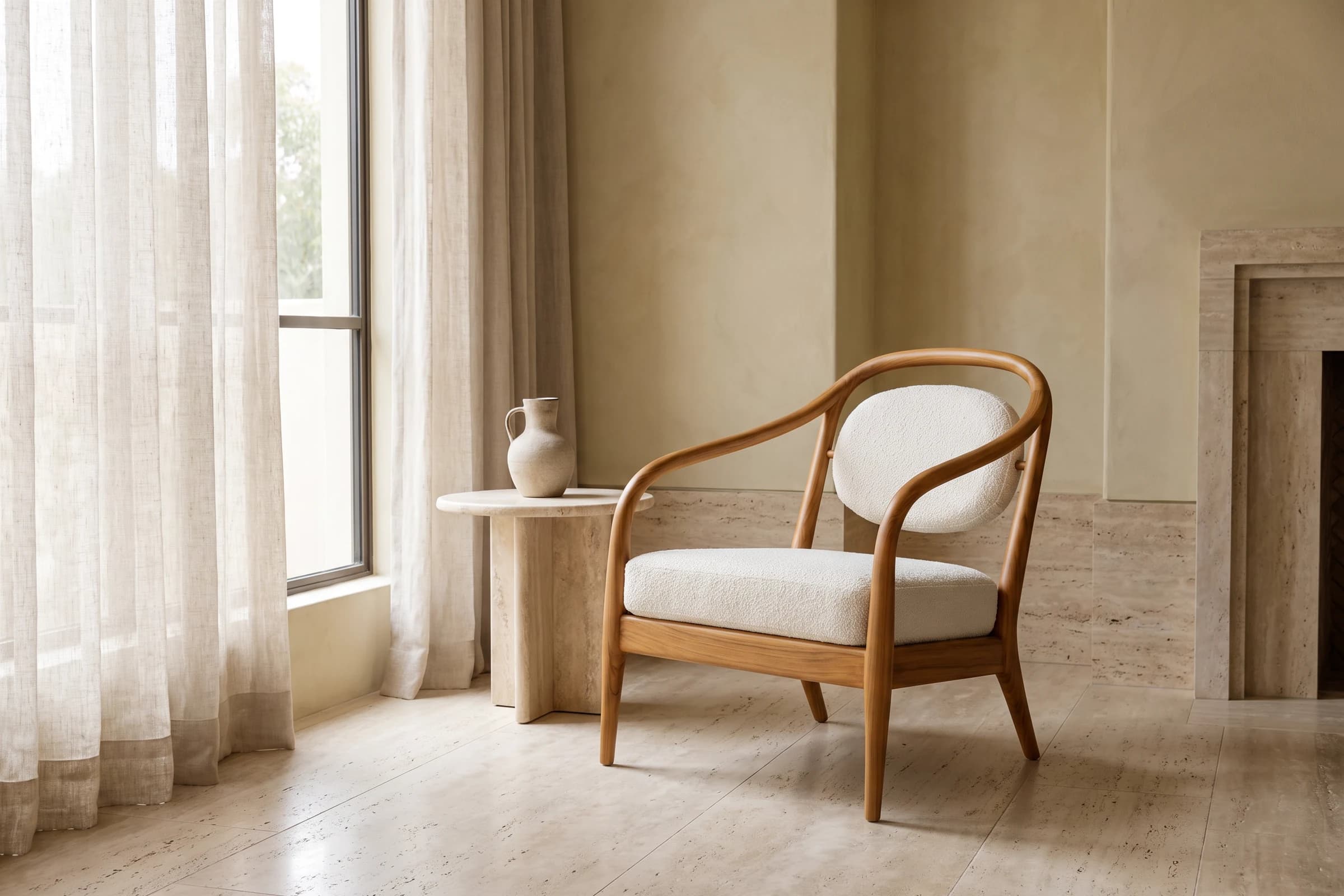
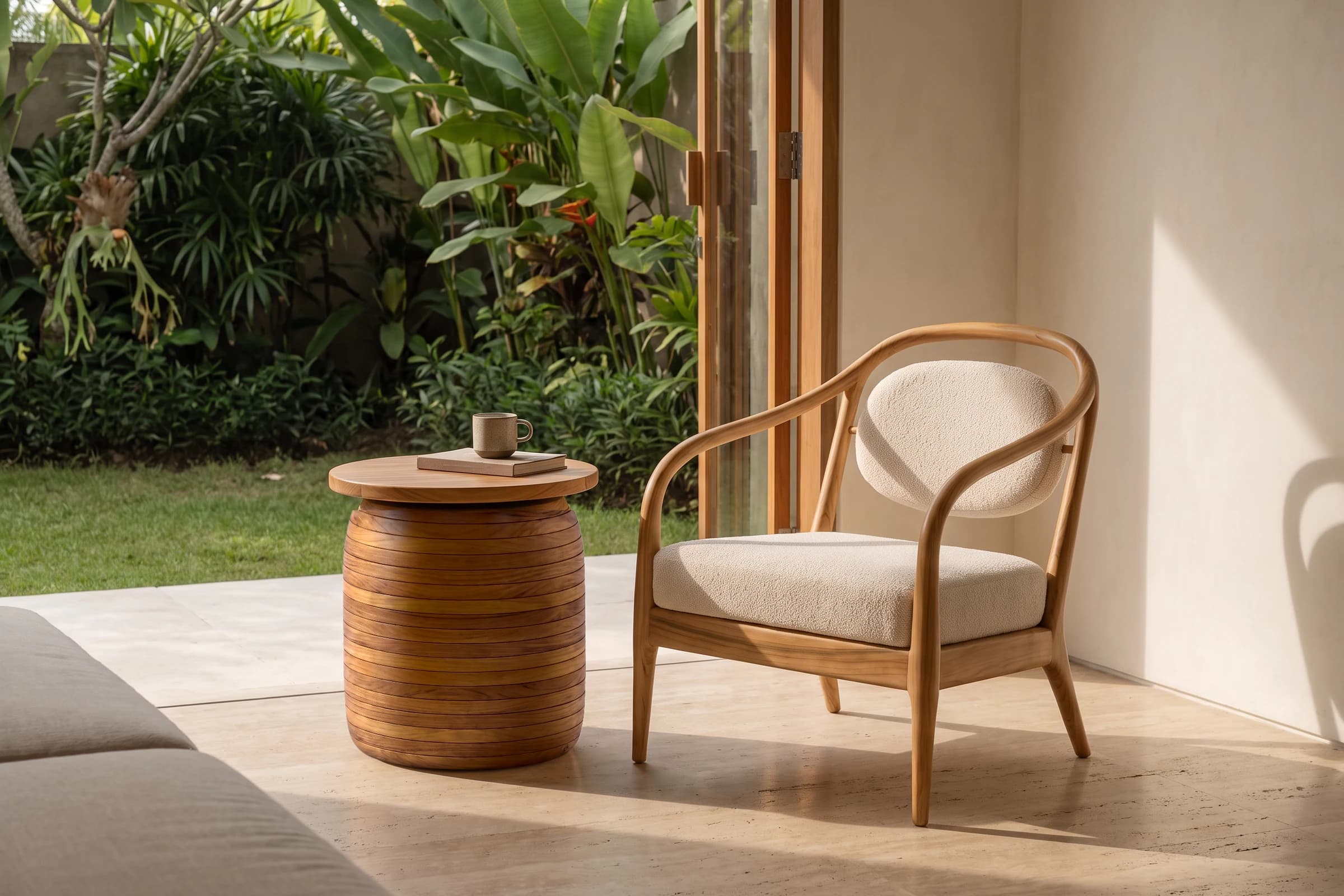
Our Armchair is an example of the first kind. On each side a teak arm grows out of the back, runs in one S-curve over the seat and rolls down into the front leg. The Drum Coffee Table is another: twelve rings of solid teak, each 2.5 cm high, stacked and turned into the shape of an upturned bowl.
One rule helps: let each piece carry one main line. Two or three strong curves in the same chair compete with each other.
Wood, stone and bouclé
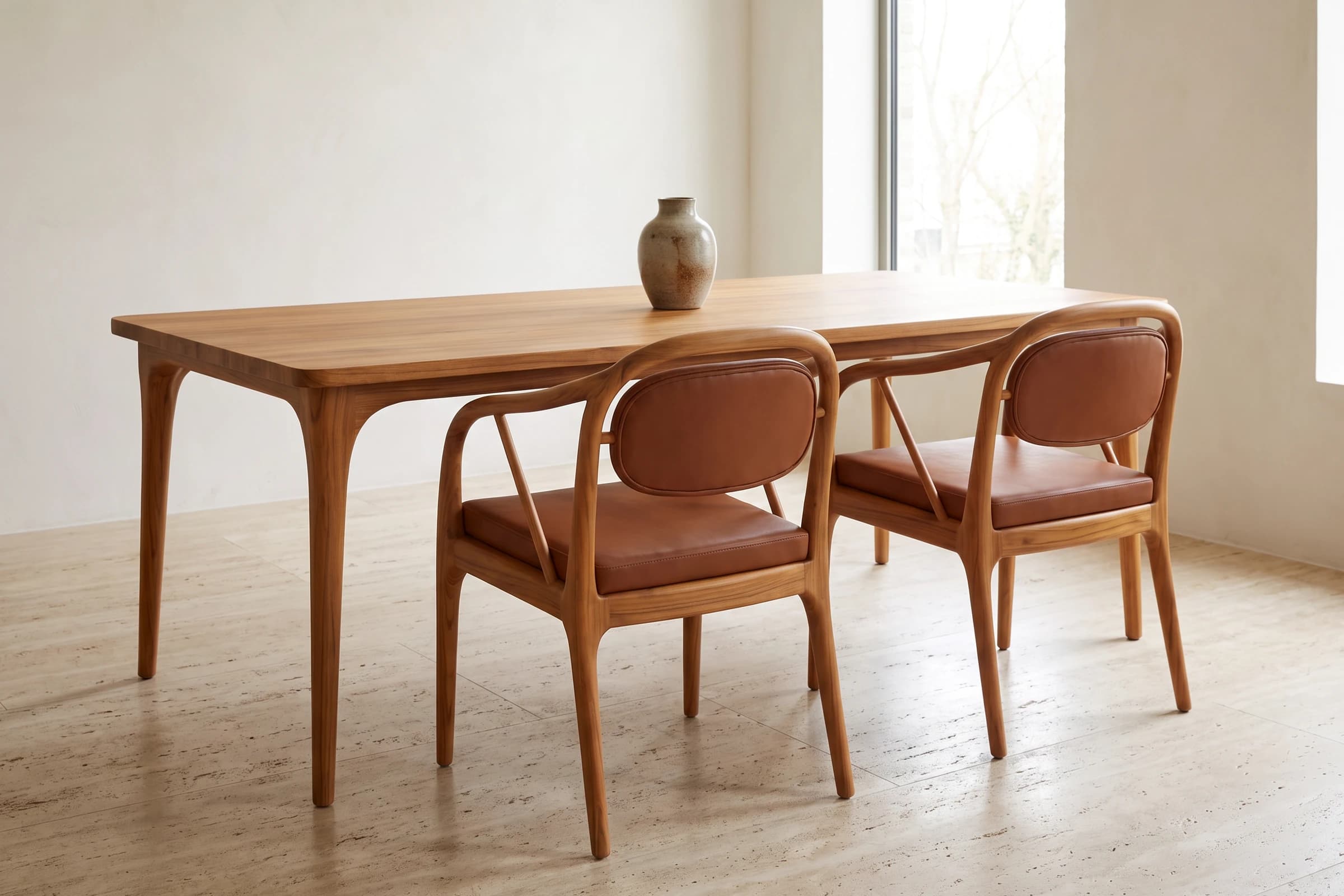
The style depends on materials that look like what they are. Solid wood shows its grain on the edge as well as the top. Stone shows its veins and pores. Bouclé and leather show their texture up close.
We work in solid teak, never veneer, finished by hand in Light Oak, Antique Oak or Wengé. Seats come in Bouclé Ivory, Bouclé Taupe, leather and textile, depending on the piece. Table tops can be teak or stone: Travertine, Crema Marfil or Dark Emperador. The full range is on materials.
- Wood: one finish for most of the room, a second at most.
- Fabric: one texture, such as bouclé, repeated on more than one seat.
- Stone: on one surface, usually a table top.
Rounded pieces in a room of straight lines
Most rooms are boxes: straight walls, square windows, a rectangular rug. A round table or a chair with curved arms softens that without changing the room.
Contrast works better than matching. A round table under a straight beam or in front of a tall window shows both lines clearly. A room where everything is rounded loses its edges and starts to look soft in the wrong way.
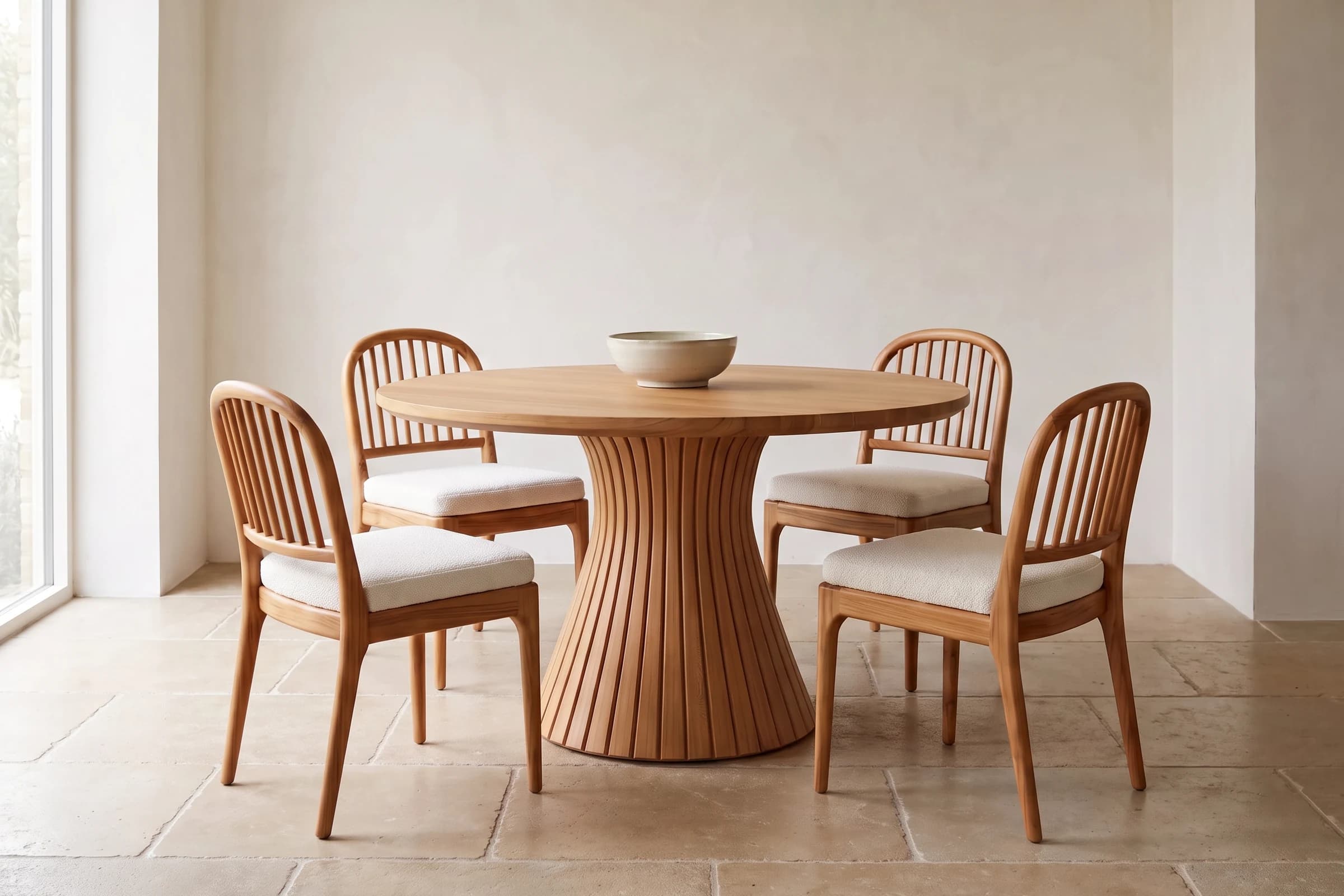
A round table also changes how people sit. With no head of the table, everyone faces the middle. Our Round Dining Table stands on one column of 36 teak staves; at Ø 120 cm it seats four, at Ø 140 cm up to seven.
Start with one piece
Choose the piece you use most and make that the rounded one. In a living room that is often the coffee table or the chair you read in. In a dining room it is the table.
For a reading corner, the Easy Chair sits lower and leans further back than a dining chair: seat at 39 cm, back at 108°. The Drum Side Table next to it uses the same teak rings as the Drum Coffee Table, 18 high, Ø 50 cm.
If you are unsure where to begin, the quiz asks seven short questions about your room and suggests three pieces.
How ordering works
We work with international architects and designers, and our atelier in Bali makes every piece by hand after your order, in about six weeks. It then travels 6–9 weeks by sea to your door, so about 12 to 15 weeks in all. We deliver within the EU.
You pay in full when you order; if you would rather pay half up front, tell us before you order. Prices include VAT, with one price across the EU, and shipping is extra. Within the EU we pay the import duties and VAT. The construction carries a two-year warranty. Another size or another outline is custom made.
Questions
What is organic modern style?
A way of furnishing that combines rounded, natural outlines with modern simplicity: solid wood, stone and woven fabric in a small palette, with no ornament and few pieces.
What is the difference between organic modern and Japandi?
They overlap. Japandi leans on Japanese and Scandinavian traditions, with low pieces, straight lines and dark accents. Organic modern puts more weight on curves and soft outlines. Both rely on natural materials and few objects.
Which wood suits organic modern furniture?
A wood with a visible grain that can be shaped and sanded to a soft edge, used solid so the grain runs round the corners. We use solid teak, finished by hand in Light Oak, Antique Oak or Wengé.
What does a solid wood organic piece cost?
Our pieces range from €1,150 to €9,900, including VAT; shipping is extra. The Drum Side Table starts at €1,600, the Drum Coffee Table at €2,900 and the Easy Chair at €3,200.
Find your piece
Seven short questions about your room, your timing and your budget — and three pieces that fit.