Bespoke, made to measure or custom: what the words mean in furniture
Four terms that are used as if they meant the same thing — bespoke, made to measure, made to order and custom — and what each one means for the design, the price, the lead time and returns.
Why the words matter
Furniture makers use four terms almost interchangeably: bespoke, made to measure, made to order and custom. They are not the same. Each describes a different amount of freedom — and with it a different price, a different lead time and, in Europe, sometimes a different position on returns. Knowing which one you are being offered saves misunderstandings later.
Bespoke: designed for you, from the beginning
The word comes from tailoring. On London’s Savile Row, cloth was said to be “bespoken” when a customer had reserved it for a garment to be cut to their own pattern. In furniture, bespoke means the same thing: a piece designed for one client and one room, from a blank page.
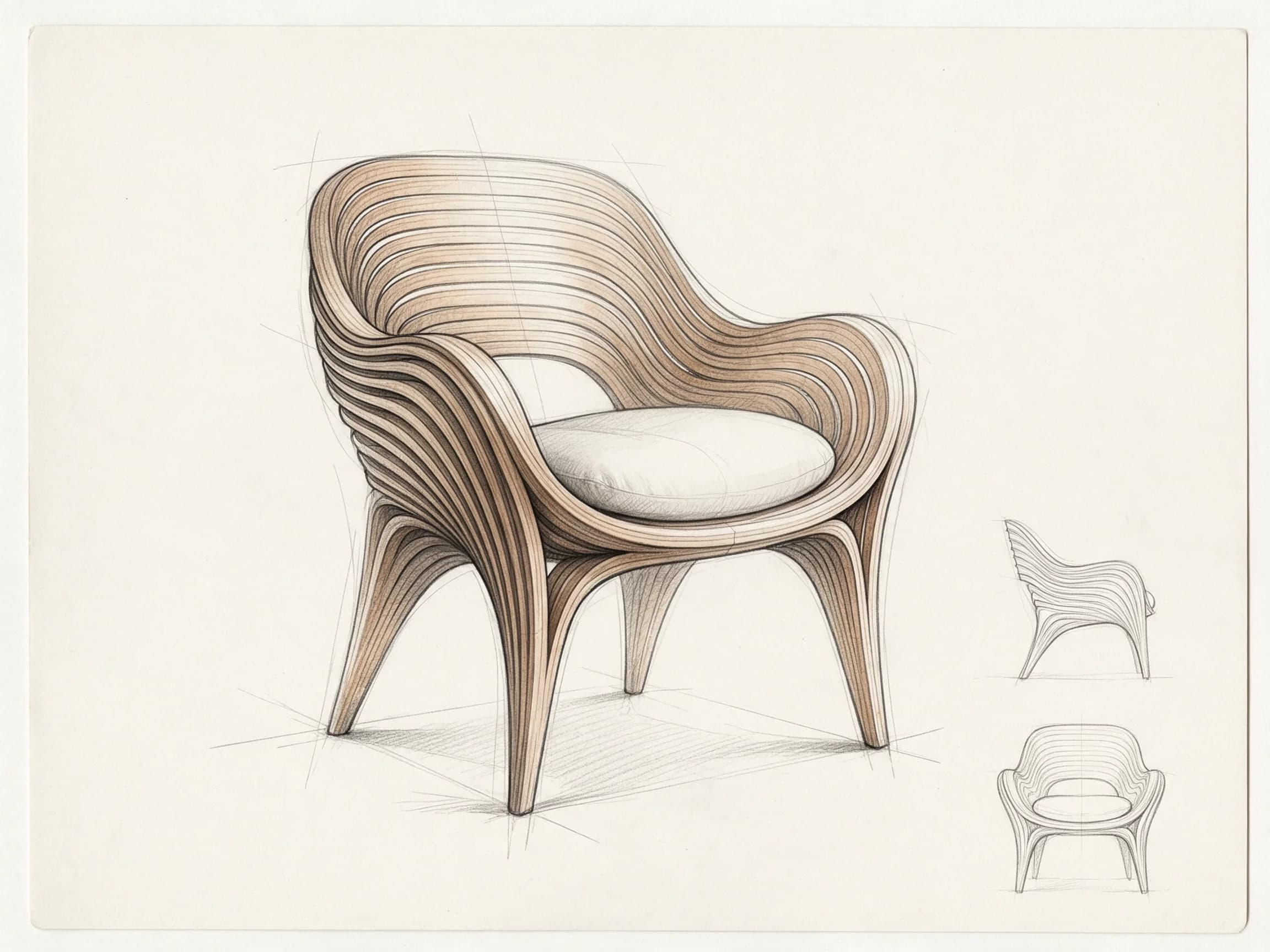
A bespoke commission starts with a conversation and a brief — the space, the use, the people, the budget — and moves through sketches and drawings to a design the client approves. Only then is it made. It is the most freedom you can buy, and the most time: the design stage comes before production begins.
In British English, “bespoke furniture” is the common term. In American English, the same thing is usually called custom.
Made to measure: an existing design, adjusted
Made to measure takes a design that already exists and changes its dimensions to fit. A dining table in a longer length, a desk a few centimetres deeper, a bed for a non-standard mattress. The form, the construction and the details are already resolved; only the measurements move.
Because the design is known, made to measure is faster and more predictable than bespoke. The maker can usually tell you quickly whether the change works — a table cannot be lengthened indefinitely without its proportions or its structure suffering — and what it does to the price.
Made to order: built after you buy
Made to order says nothing about the design and everything about the timing. The piece is a standard design in a standard size, but it is not taken from a warehouse: it is built after you place the order, often with a choice of finish or upholstery.
That is how our collection works. Every ALUR piece — from the Dining Table to the Bed — is made by hand in our atelier in Bali after your order, in solid wood (mostly teak), in the finish you choose. It takes about six weeks, plus shipping. Made to order is why there is no stock to clear, and why the piece you receive is new.


Custom: the umbrella term
Custom is the widest of the four, and the least precise. It can mean any of the above: a finish chosen from a list, a changed size, or a design from scratch. In American English it is the everyday word for what the British call bespoke. When a maker says custom, it is always worth asking: what exactly can change?
We use “custom made” for anything that departs from the collection — a different size, a different finish, or a new piece. How that works, from first call to finished piece, is on custom made.
Which one do you need?
A simple way to decide is to start from the room, not the word.
- A collection piece fits as it is, and you want to choose the finish: made to order.
- You like a design, but the length or depth does not suit your space: made to measure.
- The room, the use or the idea is unusual enough that nothing existing will do: bespoke, or custom in American English.
What it means for price, time and returns
Price follows freedom. Made to order is priced per piece, because the design exists — our collection starts at €1,150 and runs to €9,900, including VAT; shipping extra. Made to measure is quoted from the existing piece plus the change. Bespoke carries the design hours on top of the making, and is quoted per project. Our article on what custom furniture costs goes into the detail.
Time follows the same order. A made-to-order piece is built in a known period. A bespoke piece adds a design stage before production, and its length depends on how many rounds of drawings it takes.
Returns are where the terms have legal weight. In the European Union, consumers who buy at a distance generally have fourteen days to withdraw — but the law makes an exception for goods made to the consumer’s specifications or clearly personalised. A bespoke or made-to-measure piece will normally fall under that exception. We say it plainly: custom pieces cannot be returned on a change of mind (your rights if a piece is defective remain). Standard pieces bought online are a different case: at ALUR, collection pieces in a standard size and finish come with the fourteen-day right of withdrawal, even though we make them after you order.
Questions
What is the difference between bespoke and custom furniture?
In British English, bespoke means designed from scratch for one client. Custom is a wider term that can mean anything from a chosen finish to a new design; in American English it is the usual word for bespoke.
Is made to order the same as made to measure?
No. Made to order means a standard design built after you buy. Made to measure means an existing design with changed dimensions.
Can you return bespoke furniture?
Usually not. In the EU the fourteen-day right of withdrawal does not apply to goods made to the consumer’s specifications or clearly personalised. Custom pieces from ALUR are excluded from it; your rights if a piece is defective remain.
How long does bespoke furniture take?
Longer than a collection piece, because a design stage comes first. An ALUR collection piece takes about six weeks to make after your order; for custom work we give you a lead time with the quote.
Talk it through
A free 20-minute call with the people who design and make the furniture: what fits your room, the finishes, a price and a lead time.
